Power efficiency

AUO developed a flexible solar powered 6" e-paper display

AUO is showing a new prototype that integrates a flexible e-paper display with a flexible PV and battery. They call this an "unplugged flexible e-paper display". The display is 6" in size and offers 800x600 resolution, and is based on organic TFTs.

AUO flexible e-paper/PV/battery prototype photo

The PV battery is based on amorphous silicon and weights just 10 grams. With 1.5AM (air mass) solar light, it generates 1W or more of electricity (it offers conversion efficiency of about 3.6% or higher).

Seiko Epson developed a new e-paper display control platform

Seiko Epson has developed a new platform for e-paper display control that enabled high-speed refreshes for 300ppi resolution displays. The platform includes a display controller, application processor and power-supply chip and will be released in April 2011.

Seiko Epson e-paper display controller photo

via TechOn

Hitachi and Pixtronix announce a new MEMS display, to start production late 2011

Hitachi Displays is showing a new MEMS display prototype (2.5", 320x240), using Pixtronics' technology. They say that the power consumption is about half of a regular LCD, and it has 3 modes: transparent, reflectance (monochrome only) and semi-transmissive (a combination of the transparent mode and the reflectance mode, which is also monochrome only). The displays will be released towards the end of 2011 (or early 2011) in 10" or smaller sizes (for mobile devices). 

Hitachi and Pixtronix  MEMS display photo

Pixtronixs's technology is based around a MEMS shutter, backlight LED unit and a TFT driver element. Color is done via opening and shutting the MEMS shutter at a high speed and changing the amounts of the light from the LED backlight unit and natural light.

E Ink unveils their next-gen display, the Pearl - monochrome e-paper with enhanced contrast ratio

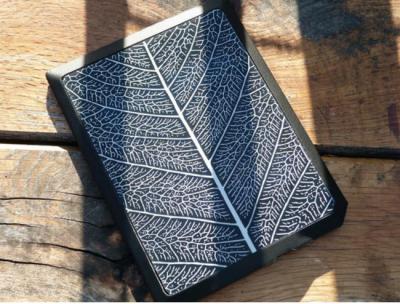
E Ink has announced their next-gen display technology called Pearl, to be released in July 2010. This new display has about 50% improved contrast ratio compared to the current Vizplex displays. The Pearl has 16 levels of gray, improved power consumption (and of course they do not require power when images are not changed).

The Pearl is the display used in Amazon's new Graphite Kindle DX, which will ship on July 2010, and cost $379.

PixelQi unveiles new 10" wide-view panels, says they are 30% more power efficient than previous ones

Pixel Qi is introducing new 10" touch-capable wideview display panels, which are 30% more power efficient than their previous models. These ones are aimed towards tablets. The company is demonstrating this on a number of tablets and netbooks.

Engadget says that the pen and finger input is very responsive in both LCD modes, and they were similarly impressed with the wideview screen on the netbooks. PixelQi's CEO Mary Lou Jepsen says that they are currently working with major manufacturers to bring these displays to the market.

Liquavista Achieves Ultra-Low Power Consumption with Latest Dynamic Low Frequency Driving Schemes

Liquavista announced a new dynamic frame rate capability down to frequencies as low as 1Hz, resulting in ultra-low power electrowetting display driving.

“Our displays already had increased power efficiency over existing displays due the their remarkable optical efficiency,” said Guy Demuynck, Liquavista’s CEO, “but with the launch of these new dynamic drive schemes, we can enable future devices to improve even further on overall power consumption, without compromising optical performance in all modes from static images, to hi-fidelity video, fulfilling our promise of true mobility.”

Interview with Liquavista's CTO

Liquavista is based in Eindhoven, the Netherlands and was founded in 2006 (a spin-out from Philips Research Labs). They have developed a new type of display technology that can operate in transmissive, reflective or transflective modes, has a great optical performance and is very efficient. Liquavista's display are based on the principle of Electrowetting (when a voltage is used to modify the wetting properties of a solid material). With Electrowetting displays, a simple optical switch is obtained by contracting a colored oil film electrically. Here's more info about the technology (PDF).

Johan Feenstra, LiquaVistas CTO photoJohan Feenstra, Liquavista's CTO, was kind enough to answer a few questions we had. Johan joined Philips Research Labs back in 1999, where he co-invented Electrowetting displays and co-founded Liquavista.

Q: Johan, can you explain Liquavista's three product families?

  • LiquavistaBright: monochrome display with improved optical performance compared to existing readers, while providing a seemless UI (iPhone-like) or even videos.
  • LiquavistaColor: full-color reflective version with video rate, so also seemless UI
  • LiquavistaVivid: Hybrid version with a highly reflective, low power monochrome mode and a full-color mode with saturated colors. The color is made with so-called Field Sequential Color Mode, so no color filter, but a fast switching Red/Green/Blue backlight.

Copyright 2010-2012 Metalgrass software